
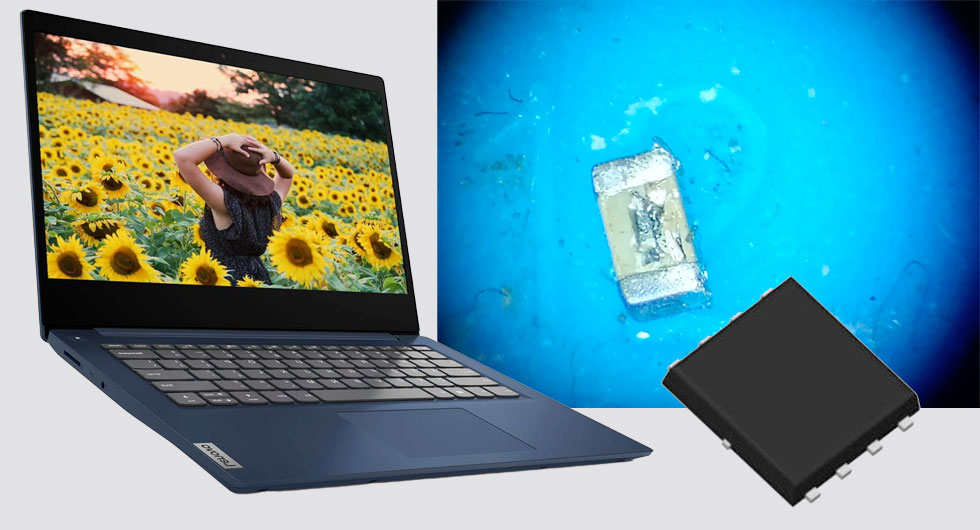
When a Lenovo laptop arrived at our workshop completely dead with no signs of life, the owner had already tried the usual troubleshooting steps without success. No power, no boot, nothing. This type of failure often points to component-level issues on the motherboard, requiring board level repair rather than simple part replacement.
Initial Diagnosis and Visual Inspection
The first step in any board level repair is a thorough visual inspection under magnification. In this case, the problem revealed itself fairly quickly – a visibly damaged capacitor on the power delivery circuit. The component showed clear physical damage with discolouration and bulging, classic signs of capacitor failure.
However, experienced technicians know that visible damage often masks additional problems. When one component fails catastrophically, it can take others with it or be a symptom of a larger issue in the circuit.
Further Investigation Reveals Secondary Fault
Using a multimeter and thermal imaging, we tested the surrounding components in the power regulation circuit. This revealed a faulty MOSFET that had likely contributed to the capacitor failure. The MOSFET was showing incorrect resistance readings and needed replacement alongside the damaged capacitor.
This is where board level repair differs from standard component replacement. It requires understanding circuit behaviour, identifying cascade failures, and ensuring all related components are functioning correctly before reassembly.
Hot Air Soldering and Component Replacement
Both components required removal and replacement using hot air soldering techniques. This method allows for precise temperature control and minimises the risk of heat damage to surrounding components or the PCB itself. After carefully removing the faulty parts, we cleaned the pads and installed new components matching the original specifications.
Testing and Verification
Once the replacement components were installed, we performed thorough testing of the power delivery system before attempting to boot the laptop. Voltage rails were checked, current draw monitored, and only after confirming stable power regulation did we proceed to power on the system.
The laptop booted successfully, with all functions restored. Board level repairs like this demonstrate why component-level diagnosis is essential for seemingly dead devices – often the motherboard can be saved rather than replaced entirely, providing a cost-effective solution for customers.
This type of repair requires specialised equipment, technical knowledge, and experience with component-level troubleshooting. When your laptop won’t power on and standard fixes haven’t worked, board level repair may be the solution that saves your device. Contact us to see how we can help you.